
Argentina held by Switzerland at World Cup 2026 – what went wrong for Messi’s side
July 12, 2026 · 8 min read
Argentina 3-1 Switzerland (AET) – World Cup 2026 Quarterfinal, July 11, Kansas City
At 67 minutes, Switzerland had equalized and Murat Yakin was preparing fresh attacking substitutions. For long stretches of the second half, the Swiss had been the better side. The defending champions looked exactly like what they’d been for stretches of this tournament: a side that had leaned too hard on a 39-year-old genius, only to find him subdued when it mattered most.
Then a VAR screen lit up, Breel Embolo left the field in tears, and the entire balance of the match collapsed.
Argentina advance to the semi-final. Switzerland head home furious. And the full story of what happened in Kansas City is considerably messier than the scoreline suggests.
The first half: Argentina dominant, Switzerland disciplined
Mac Allister’s header on ten minutes – directed low into Kobel’s right from a Messi corner – was a clean, confident statement. Argentina’s xG of 0.32 in the opening 45 minutes dwarfed Switzerland’s 0.06. They had 48% of the ball but nearly all of the meaningful territory.
Switzerland sat in their 4-2-3-1 with Granit Xhaka anchoring deep, and the structure held. At the 14th minute Messi cut inside from the right in trademark fashion – Xhaka was there. Two minutes later Rodriguez gave possession away cheaply, Messi attacked again – Xhaka blocked again. Two interceptions in two minutes, both clean, both textbook.
Kobel wasn’t seriously tested. Emiliano Martínez wasn’t tested at all.
The first half ended 1-0 to Argentina, which was an accurate summary of the half – no more, no less.
Switzerland’s game plan, and why it nearly worked
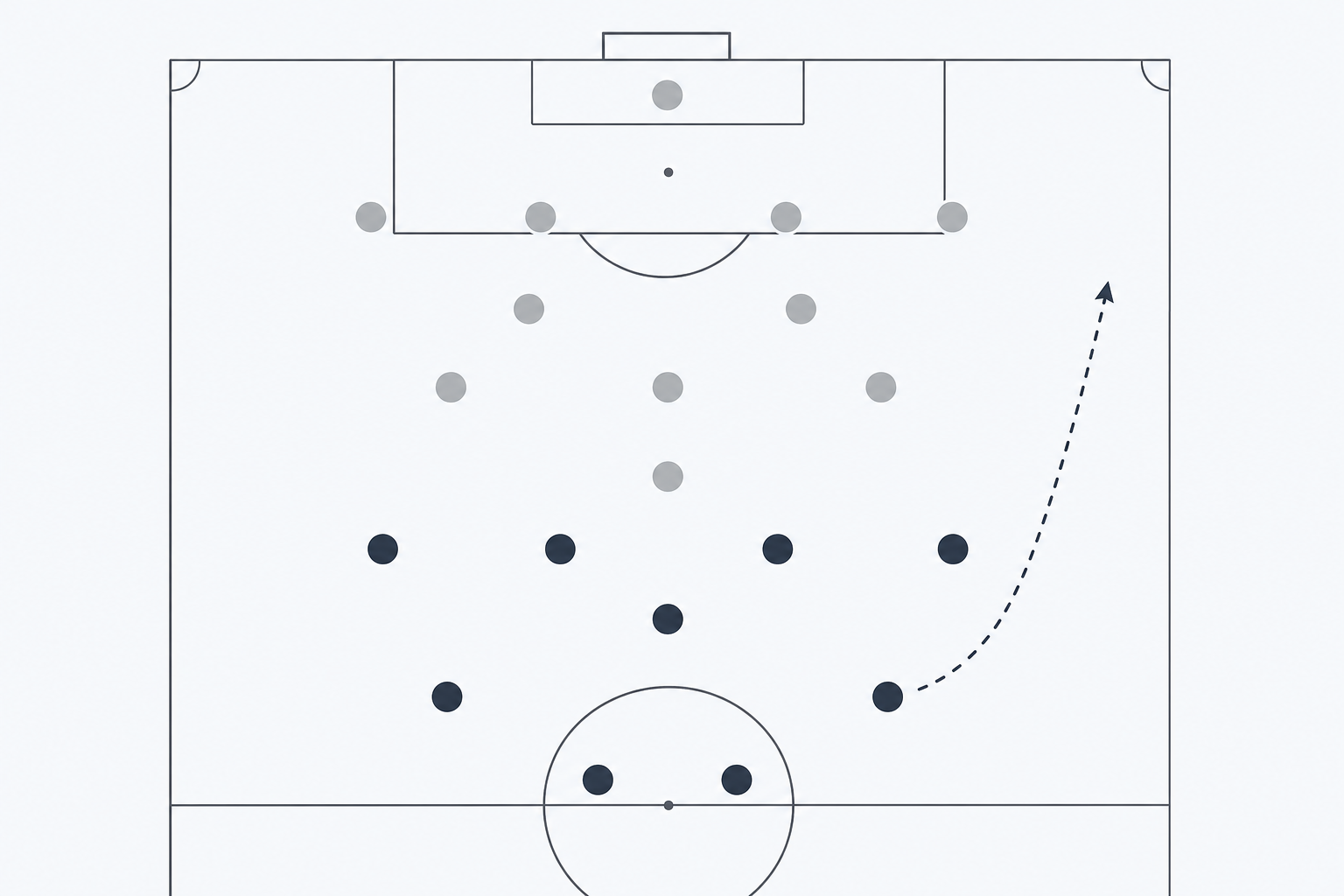
Yakin’s setup was not passive – it was precise. The 4-2-3-1 gave Switzerland a compact mid-block that denied Argentina the central channels where Messi, De Paul, and Mac Allister want to combine. The wide channels were left open by design, inviting Argentina into areas where their crossing is less threatening.
Meanwhile, Embolo as a physical hold-up target and Ndoye’s runs behind the Argentine defensive line were a constant threat on the counter. Switzerland had the better of the second half in terms of territory and energy, and the equalizer, when it arrived at 67 minutes, was fully deserved.
Dan Ndoye slotted home from close range. The score was 1-1. Yakin was reaching for his substitution board to push for a winner.
What happened next rewrote the match.
The red card that changed everything
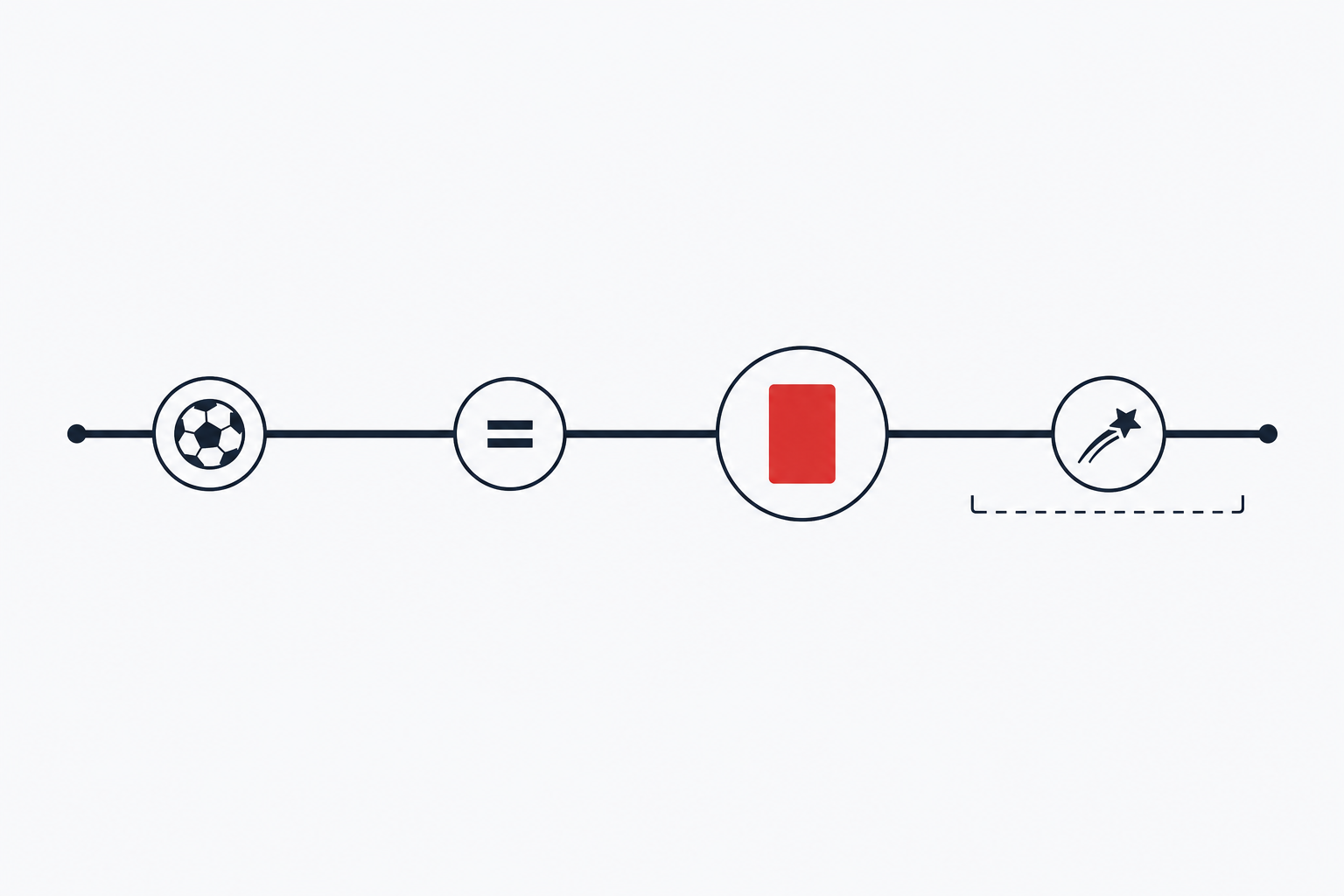
At 72 minutes, Embolo went down in the Argentine half following a challenge from Leandro Paredes. Referee João Pinheiro showed Paredes a yellow card. Standard enough.
Then VAR intervened – and not in the way anyone expected.
FIFA introduced a “mistaken identity” protocol for the 2026 World Cup, designed to correct situations where a referee books the wrong player. Reviewing the footage, VAR determined that Embolo had gone to ground before Paredes made contact – meaning the foul was fabricated, and the booking for simulation should have gone to Embolo rather than Paredes.
The card was transferred. Embolo, already on a yellow from earlier in the match, received his second. He was ordered off in tears.
The numbers that frame what just happened:
- Embolo became only the 4th player in 60 years of World Cup history to receive a second yellow for simulation, joining Italy’s Francesco Totti (2002), Mexico’s Luis Pérez (2006), and Ghana’s Asamoah Gyan (2006).
- This was only the second use of the “mistaken identity” VAR protocol at the entire 2026 World Cup tournament.
Yakin’s reaction afterwards was unambiguous. “We were dominant. We controlled the game. But the red card, we are punished because of a rule that is, to me, absolutely incomprehensible.” Granit Xhaka: “I think the red card changed our game.” Nico Elvedi: “I just don’t understand how VAR can make that kind of decision.”
Switzerland’s counterargument – and why it has merit
Yakin made a point that deserves to be taken seriously. The mistaken identity protocol is a correction mechanism, not an independent review. It can only be triggered when a booking has already been given. So the chain of events was: Pinheiro awards foul + yellow → VAR reviews for identity → red card follows.
If Pinheiro had waved play on – if he’d judged there was no foul, or no booking warranted – VAR would never have looked at it. Switzerland’s argument: “He corrected his own mistake against us.” It’s not a claim that Embolo was innocent; it’s a claim about how the rule is structured and who ends up paying for the referee’s initial error.
What went wrong for Argentina – the 90-minute picture
The final score flatters Argentina. For most of normal time, they were a side in search of a plan that didn’t involve Lionel Messi.
The Messi problem. At 39, Messi arrived at this quarterfinal carrying 120 minutes of extra time against Cape Verde and the physical toll of a dramatic comeback against Egypt (where he scored a late goal and assisted to drag Argentina back from 0-2). The fatigue was visible. Messi himself admitted it publicly. Xhaka’s game plan – double him, disrupt his rhythm, force Argentina to produce without him – worked almost completely.
Set-piece dependency. Argentina’s only regulation goal came from a corner. That’s not inherently a problem, but when your open-play creation against a deep-sitting block amounts to almost nothing, it’s a sign. Switzerland’s structure made central combination football nearly impossible; Argentina didn’t find a way around it through 90 minutes.
The near-misses that capture the frustration. Deep into stoppage time, two moments crystallized Argentine anxiety. Lisandro Martínez flung himself at a loose ball in the Swiss box with a scissor-kick – Kobel saved. Then Messi broke one-on-one, lifted a chip over the goalkeeper – Kobel saved, and the referee’s assistant raised the flag for offside. Replays suggested it might not have been offside. Had it stood, it would have been Messi’s ninth goal in six appearances at this tournament, pulling him clear of Mbappé in the Golden Boot race.
Normal time ended 1-1. Argentina had been the better side on paper; Switzerland had been the better side on the pitch for long periods of the second half.
Extra time: Álvarez takes over where Messi couldn’t
With Embolo gone and Switzerland forced to push forward with ten men in the dying minutes of extra time, the gaps at the back became enormous. Argentina exploited them twice.
At 112 minutes, Julián Álvarez received the ball 25 yards from goal and hit a fizzing strike into the top right corner that gave Kobel no chance. A stunning effort – the kind of goal that ends arguments about whether Argentina have anyone beyond Messi.
At the edge of added time at the end of extra time, substitute Thiago Almada led a counterattack as Switzerland threw bodies forward in desperation. His shot was deflected kindly into the path of Lautaro Martínez, who slotted home to make it 3-1.
Final score: Argentina 3-1 Switzerland (AET).
Argentina’s knockout-stage pattern at this World Cup is now fully established: ground through 90 minutes, find a way in extra time or late on:
- vs Cape Verde: pushed to extra time, won 3-2
- vs Egypt: trailed 0-2, won 3-2 with late Messi goal and assist
- vs Switzerland: equalized at 67′, red card at 72′, won 3-1 AET
They are not a dominant side. They are a side that finds ways. Whether that’s enough against England in Atlanta is a genuinely open question.
What’s next
Argentina face England in the World Cup 2026 semi-final in Atlanta. It is, by any measure, the most anticipated match of the tournament – a rematch of the 1986 final, 40 years on, with Messi on one side and a resurgent England team on the other.
Switzerland go home having pushed the world champions harder than the scoreline shows, and with every right to feel the game was taken from them by a chain of events that only started because a referee made an error in the first place.
Follow every World Cup match live on faston.click
The Argentina vs England semi-final and every other World Cup 2026 match on faston.click. Real-time scores, match timelines, and live updates across every competition – no account needed, no noise.
Sources: Al Jazeera · ESPN match report · ESPN – Embolo red card · Al Jazeera – mistaken identity VAR explained · r/football post-match thread