
Why Do World Cup Players Represent Countries They Were Not Born In? The Full Explanation
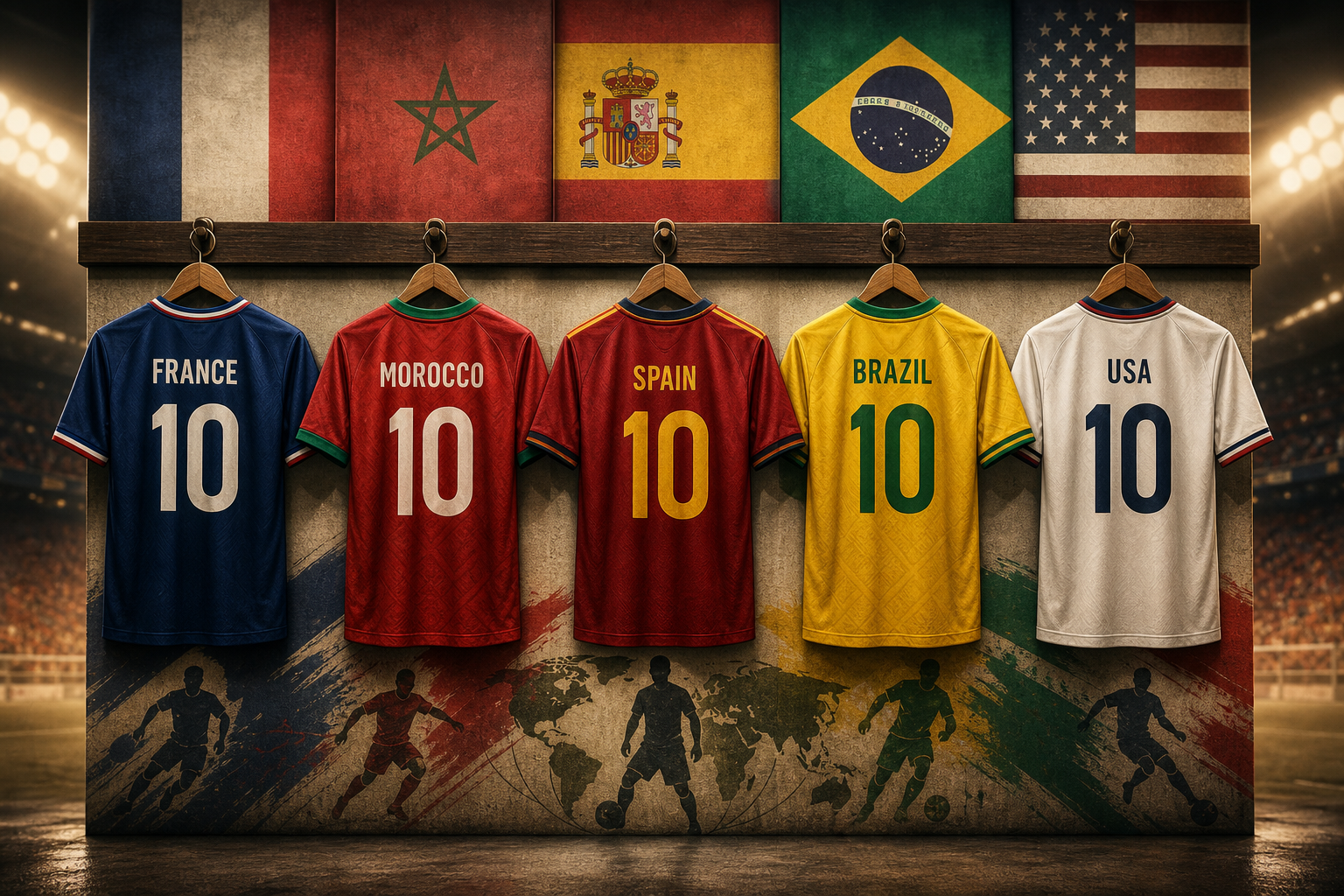
Published: July 10, 2026 | Tournament: FIFA World Cup 2026
One of the most fascinating and sometimes controversial aspects of the FIFA World Cup 2026 is just how many players are competing for nations they were not born in. At this year’s tournament in Canada, Mexico, and the United States, a record-breaking 289 out of 1,248 players – nearly one in four – are representing a country other than their birth nation.
That’s not a coincidence. It’s the result of decades of changing FIFA rules, shifting global migration patterns, deliberate scouting strategies by national federations, and deeply personal decisions made by players navigating complex questions of identity, loyalty, and opportunity.
So why does it happen? Who benefits? And is it a good thing for football? Let’s break it all down.
The Numbers: A Record-Breaking World Cup 2026
The 2026 FIFA World Cup has set an unprecedented record for foreign-born player representation. According to data published by the New York Times Athletic and confirmed by FIFA squad registrations:
- 289 players (23%+) are representing countries they were not born in
- Only 8 out of 48 teams do not have a single foreign-born player
- Morocco made history in their opening group match against Brazil – for 25 minutes, not a single player on the pitch had been born in Morocco
- Curaçao, a World Cup debutant, featured only one player born on the Caribbean island – the rest were largely Netherlands-born
- Qatar has assembled a squad drawing on players from 10 different nationalities
To put this in context: in the 1998 World Cup, the proportion of foreign-born players was around 7%. By 2022 it had risen to 16.5%. In 2026, it surpassed 23% – by far the highest in the tournament’s history.
How Does FIFA Eligibility Work?
To understand why so many players represent nations they weren’t born in, you first need to understand FIFA’s eligibility rules – and how they have evolved over time.
The Early Days: No Rules at All
When FIFA was founded in 1904 and the World Cup launched in 1930, there were essentially no nationality restrictions. Players could represent any country they chose. The most famous example is Luis Monti, an Argentine midfielder who played for Argentina in the 1930 World Cup final and then, after moving to Juventus, switched allegiance and won the 1934 World Cup with Italy. He remains the only person ever to appear in two World Cup finals for different nations.
1962: FIFA Introduces Formal Rules
In 1962, FIFA issued formal eligibility criteria for the first time. Players now had to hold citizenship of the country they wished to represent, and once they had played for a nation in an official competition, they were permanently tied to it with no exceptions.
2003-2004: The Game-Changing Reform
The most significant shift came in 2003-2004, driven largely by North African football federations. The key architect was Mohamed Raouraoua, the former president of the Algerian Football Federation, who argued that African players were being selected for European junior teams and then blocked from ever playing for the nations of their heritage.
“We didn’t think it was fair that players of African origin were being selected for junior teams of European countries and then never getting a chance to play at full international level. Our proposal was to give liberty and freedom to these players to have a right to choose,” Raouraoua explained.
FIFA agreed. The 2003 amendment allowed players to switch international allegiance under certain conditions. The rules have been refined since, but the core framework now stands as follows:
A player can represent a country if they:
1. Were born there, OR
2. Have at least one parent or grandparent born in that country, OR
3. Have resided in that country for at least five years
To switch from one nation to another, a player must:
– Hold citizenship for the new country
– Have played three or fewer senior international matches for the previous country, all before the age of 21
– Receive formal approval from FIFA
The 2021 FIFA revision further loosened some restrictions, allowing players who had been tied to one national team to apply to switch in limited circumstances – opening the door for even more transfers of allegiance.
Why Do Players Choose to Represent a Different Country?
The reasons are as varied as the players themselves. Some decisions are deeply emotional. Others are coldly pragmatic. Most involve a mix of both.
1. Family Heritage and Cultural Identity
For many players, the choice is fundamentally about who they feel they are. Growing up in a diaspora community – French-Moroccan, Dutch-Senegalese, British-Nigerian – means carrying two identities simultaneously. When the time comes to choose a football nation, it is often a statement about which part of that identity feels most authentic.
Ayyoub Bouaddi, the young Moroccan-French midfielder who played for Morocco in the 2026 World Cup after being born in France and qualifying to play for Les Bleus, put it plainly after Morocco’s quarter-final exit: “No regrets in choosing not to play for France.” For Bouaddi, it was a decision rooted in pride, heritage, and belonging – not tactics or career calculations.
Michael Olise, France’s attacking midfielder at this World Cup, was born and raised in London but chose to represent France through his French mother. “France is my mother’s country,” he has said. “That connection has always been there.” The question of which nation to represent was, for him, inseparable from the question of who he is.
Ibrahim Mbaye presents perhaps the most striking example at this tournament. The 17-year-old had represented France at every youth level before announcing he would play for Senegal – his mother’s birth country. He then scored against France in the 2026 group stage. “I will never regret choosing to play for Senegal because it was a decision from the heart,” he said.
2. Better Chances of Playing at a Major Tournament
The brutal reality of elite football is that some nations have far more talent than others. A player who might never get close to representing France, Germany, or Brazil might become a key figure for Senegal, Morocco, or Cape Verde.
For players on the fringes of stronger squads, switching to a nation with heritage ties can be the difference between playing at a World Cup and never making it to one. This is not cynicism – it is a rational response to the structure of international football.
The case of Cape Verde is instructive. A small island nation with a population of around 600,000, Cape Verde has built an extraordinarily competitive team by scouting the diaspora communities in Portugal, the Netherlands, and France. At World Cup 2026, they held European champions Spain to a goalless draw in the group stage – almost entirely thanks to foreign-born players who chose Cape Verde for a chance to play at the highest level.
3. Nations Actively Recruit Diaspora Players
This is not accidental. Many national federations have built deliberate, systematic scouting operations targeting diaspora communities in Europe and beyond.
Morocco is the most celebrated example. From the 2010s onwards, the Royal Moroccan Football Federation placed scouts in France, Belgium, and the Netherlands – countries home to large Moroccan migrant communities – and began building relationships with young players of Moroccan heritage who were growing up at European clubs.
The results were transformative. By the time of the 2022 Qatar World Cup, Morocco had become the first African nation to reach the semi-finals, powered largely by diaspora players: Achraf Hakimi (born in Madrid), Hakim Ziyech (born in the Netherlands), and many others.
At the 2026 World Cup, that process reached its logical conclusion: for part of their opening group match against Brazil, every single Morocco player on the pitch had been born outside Morocco. The Atlas Lions reached the quarter-finals again – their second consecutive last eight – in what head coach Walid Regragui called “the greatest period in Moroccan football history.”
4. Political, Historical and Colonial Ties
Migration patterns don’t exist in a vacuum. They reflect centuries of colonial history, economic inequality, and political movements that have shaped where people live. Many of the players representing “non-birth” nations at the 2026 FIFA World Cup are the children or grandchildren of migrants who left their home countries during specific historical periods.
Senegalese players born in France, Algerian players born in France, Nigerian players born in England – these are not random pairings. They reflect the historical relationship between coloniser and colonised, the movement of people seeking work and opportunity, and the communities that formed in the decades that followed.
Professor Gijsbert Oonk of Erasmus University, a historian specialising in migration and identity, explains: “Almost 4% of the world population lives in a country in which they were not born. This is even higher with high-skilled workers and elite athletes. It’s a reflection of migration patterns.”
5. Naturalisation: A New Country, A New Allegiance
Not all cases involve heritage. Some players represent countries they have adopted through long-term residence and naturalisation – building genuine lives there before committing to the national team.
The most famous example is Pepe, the former Real Madrid and Portugal defender. Born in Brazil, Pepe moved to Portugal in 2001, built his career there, became a Portuguese citizen, and committed to the national team – despite reportedly being approached about representing Brazil. “I never regretted my decision to become Portuguese,” he said. “I see facing Brazil as any other game: I will always honour Portugal’s colours.”
Families Divided: Brothers Representing Different Countries
One of the most emotionally charged consequences of this system is the sight of brothers competing for different nations at the same World Cup.
At 2026, four sets of brothers are representing different teams:
| Brothers | Countries |
|---|---|
| Désiré Doué & Guela Doué | France vs Ivory Coast |
| Nico Williams & Iñaki Williams | Spain vs Ghana |
| Harry Souttar & John Souttar | Australia vs Scotland |
| Derrick Luckassen & Brian Brobbey | Ghana vs Netherlands |
Before 2026, this had only happened twice – when Jerome and Kevin-Prince Boateng (half-brothers) represented Germany and Ghana at both the 2010 and 2014 World Cups, facing each other on the pitch each time.
These situations lay bare the complexity of identity that drives this whole phenomenon. Two people raised in the same home, with the same background, can feel genuinely pulled in different directions – and the football field becomes a stage for playing out that complexity.
The Controversy: Is This Good for Football?
Not everyone is happy about this trend. The debate is long-running and shows no signs of resolution.
Critics argue that the essence of international football – nations competing against nations, with teams representing a country’s culture, history and people – is diluted when squads are assembled from the global diaspora. Former FIFA president Sepp Blatter warned as far back as 2007 that World Cups dominated by diaspora recruitment risked undermining national identity in the sport.
Brazil-born Diego Costa was famously booed by Brazilian fans throughout Spain’s participation in the 2014 World Cup – played on Brazilian soil – for choosing to represent the Europeans. It was a visceral demonstration of how personally some fans take a player’s nationality choice.
Supporters of the current system counter that modern identity is genuinely complex, that migration is a human reality not a football problem, and that the system gives players fair choices they are fully entitled to make. Dr Myriam Cherti of Oxford University’s Centre on Migration, Policy and Society argues: “The national team is no longer only a reflection of population inside the border. It’s increasingly a reflection of migration, history and global mobility.”
There is also a competitive fairness argument. The new rules have been the single biggest factor in improving football in Africa and smaller nations. Teams like Morocco, Senegal, and Cape Verde are far more competitive today than they would be without diaspora players – making the tournament richer, more unpredictable, and more genuinely global.
Notable Examples at the 2026 World Cup
| Player | Born In | Representing | Reason |
|---|---|---|---|
| Michael Olise | London, England | France | French mother |
| Ayyoub Bouaddi | France | Morocco | Moroccan heritage – personal choice |
| Ibrahim Mbaye | France | Senegal | Senegalese mother |
| Achraf Hakimi | Madrid, Spain | Morocco | Moroccan parents |
| Antonee Robinson | Milton Keynes, England | USA | American father |
| Roberto Lopes | Dublin, Ireland | Cape Verde | Cape Verdean father |
| Iñaki Williams | Bilbao, Spain | Ghana | Ghanaian parents |
| Nico Williams | Pamplona, Spain | Spain | Chose birth country over heritage |
What This Means for the Future of International Football
The 2026 World Cup, with its record-breaking 289 foreign-born players, is not an anomaly – it is a preview of what international football will increasingly look like. As global migration continues, as diaspora communities grow, and as FIFA’s eligibility rules remain flexible, the proportion of players representing their “second” nation will only rise.
This creates rich storytelling – players like Bouaddi and Mbaye whose choices make headlines, families like the Williams brothers whose loyalties pull in opposite directions, and underdogs like Cape Verde who punch far above their weight thanks to communities spread across the globe.
It also raises genuine questions about what a “national team” is and what it means. Those questions don’t have easy answers. But the 2026 World Cup makes abundantly clear that they are questions worth asking.
Conclusion
The record number of World Cup players representing countries they were not born in at FIFA World Cup 2026 is the result of converging forces: changed FIFA rules, global migration, deliberate diaspora scouting strategies, and deeply personal choices about identity and belonging. For players like Michael Olise, Ayyoub Bouaddi, and Ibrahim Mbaye, the decision is never simply about football – it is about who they are, where they come from, and what flag they want to carry into the world’s most watched sporting event.
Whether you see it as a beautiful reflection of our globalised world or a complication of football’s national identity, one thing is certain: the 2026 World Cup has made this conversation impossible to ignore.
Sources: BBC Sport, Reuters, New York Times (The Athletic), Forbes, ESPN, FIFA.com